Free Ebook Introducing Chaos: A Graphic Guide
Improving the life capability and quality will certainly make you really feel much better and also to get it, it's at some point hard. But, by reading, it can be among the clever means to overcome it. That's' what constantly think to see how particular book as Introducing Chaos: A Graphic Guide could step forward to earn your life much better. When you have various point to bear in mind or discover, you can find other book title in this site, as well.
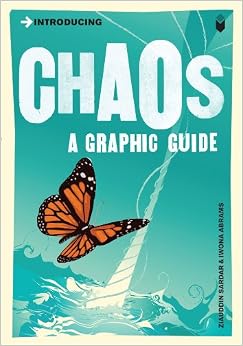
Introducing Chaos: A Graphic Guide

Free Ebook Introducing Chaos: A Graphic Guide
How a concept can be got? By looking at the superstars? By visiting the sea as well as checking out the sea weaves? Or by reviewing a book Introducing Chaos: A Graphic Guide Everyone will have specific unique to get the motivation. For you that are passing away of publications and also still get the motivations from books, it is actually wonderful to be right here. We will show you hundreds collections of the book Introducing Chaos: A Graphic Guide to read. If you such as this Introducing Chaos: A Graphic Guide, you can also take it as yours.
When some individuals taking a look at you while checking out Introducing Chaos: A Graphic Guide, you may feel so pleased. But, rather than other people feels you need to instil in on your own that you are reading Introducing Chaos: A Graphic Guide not as a result of that factors. Reading this Introducing Chaos: A Graphic Guide will certainly give you greater than people admire. It will certainly overview of know greater than individuals looking at you. Already, there are lots of sources to understanding, reviewing a publication Introducing Chaos: A Graphic Guide still ends up being the front runner as a wonderful method.
By soft data of guide Introducing Chaos: A Graphic Guide to review, you could not have to bring the thick prints everywhere you go. Whenever you have ready to check out Introducing Chaos: A Graphic Guide, you could open your gizmo to review this publication Introducing Chaos: A Graphic Guide in soft file system. So easy as well as rapid! Checking out the soft data book Introducing Chaos: A Graphic Guide will offer you simple means to check out. It could also be much faster because you can review your book Introducing Chaos: A Graphic Guide almost everywhere you want. This online Introducing Chaos: A Graphic Guide can be a referred publication that you could appreciate the option of life.
Well, to obtain this book is so simple. You could save the soft file of Introducing Chaos: A Graphic Guide forms in your computer device, laptop, or even your gadget. It comes to be a few of benefits to take from soft file publication. Guide is offered in the link. Every site that we provide right here will include a web link and also there is just what you could discover guide. Having this publication in your device end up being several of how the innovative technology currently develops. It indicates that you will not be so hard to discover this of book. You can look the title and any kind of subject of checking out book here.
"Introducing Chaos" explains how chaos makes its presence felt in many varieties of event, from the fluctuation of animal populations to the ups and downs of the stock market. It also examines the roots of chaos in modern mathematics and physics, and explores the relationship between chaos and complexity, the new unifying theory which suggests that all complex systems evolve from a few simple rules.This is an accessible introduction to an astonishing and controversial theory that could dramatically change our view of the natural world and our place in a turbulent universe.
Your recently viewed items and featured recommendations
›
View or edit your browsing history
After viewing product detail pages, look here to find an easy way to navigate back to pages you are interested in.
Product details
Series: Introducing
Paperback: 176 pages
Publisher: Icon Books; Fourth edition (December 15, 2004)
Language: English
ISBN-10: 1848310137
ISBN-13: 978-1848310131
Product Dimensions:
4.8 x 0.5 x 6.7 inches
Shipping Weight: 5.6 ounces (View shipping rates and policies)
Average Customer Review:
3.4 out of 5 stars
13 customer reviews
Amazon Best Sellers Rank:
#297,778 in Books (See Top 100 in Books)
This book provides a good introduction to overview of chaos theory and to fractals. I would highly recommend this book.
I was looking for an easy-to-understand book on Chaos Theory for some non-English speakers (say, some Japanese students) to read, and I personally like "Introducing Fractal Geometry", so I got my hand on this book...It was a mistake.I would not say much about this. The author did introduce Chaos, not really Chaos theory, to the readers. He tried his best, I believe, to make things easy to understand by simplifying things... However, in doing so, he had just created Chaos.Hence, this book is probably one of the best examples of "How Simplicity creates Complexity and Chaos"... a simple scheme found in Complex systems (like complex Cellular Automata which emerged from a simple set of rules).One thing, while a lot of names (technical terms) were introduced, almost all of them are left unexplained. And I think only "introducing" is never enough. (Well, it was the name of the book afterall... this book wasn't named "Explaing Chaos" :)There are other good books on Chaos for layperson. And, in fact, "Introducing Fractal Geometry" did a far better job than this one.
Well written and fairly illustrated with almost not math. A definitely must for the curious mind with no time for a degree in physics .
The main problem with the book is its emphasis on multiculteralism, not to mention that the author simply does not know his stuff. We are told that Galileo ignored friction in order to get "neat results" and somehow caused Western science to only study linear systems. He seems to think that nonlinearity and chaos are the same thing. He tells us that nonlinear problems are not solvable. He actually suggests that we have only recently seen that the three-body problem is chaotic. (Instead Poincare proved the chaotic nature of the problem around 1890.) He seems to think that Asian philosophies actually capture the mathematical substance of chaos theory. I could go on. If you want to study chaos get the volume "Chaos and Fractals: New Frontiers of Science" by Peitgen, Jurgens, and Saupe.
This is a well-reasoned, carefully thought out book that allows for a good introduction of the subject of Chaos. I wish that the volume was a bit more of a "populist" volume (like Larry Gonick used to write and draw), but that might be a bit too much to ask these days.
My personal exploration of the ideas of improvement and change have led along a path in which quantum physics, uncertainty, chaos and complexity have almost mysteriously become topics of growing relevance. It is fitting then that this book introduced me to one of the features of chaos, the strange attractor, a mechanism that draws a system's behaviour towards particular ways of operating.Books in this series can be read in a day. They use a mix of text and cartoon style graphics to convey the key ingredients of a subject in a concise and straightforward way. The challenge of describing chaos theory is not a trivial one. Though it may require a couple of re-reads, the book does a pretty impressive job of introducing the key figures in the development of chaos theory, its key concepts and how chaos affects our lives.I was intrigued for example to find Ray Bradbury Zen in the Art of Writingas the author of `A Sound of Thunder' a short story which predates the development of chaos theory.At the heart of chaos is that complex systems, which meet a small number of criteria, will produce outcomes that are deterministic, but not predictable. This seems a paradox, and as Niels Bohr said"How wonderful that we have met with a paradox. Now we have some hope of making progress."What is startling is that systems don't have to be very complex to be classed as complex, and the criteria, such as non-linear feedback can be found in most systems. The result is that chaos is all around us. What is intriguing is that science, and our desire to understand has led us to simplify our models of the world in such a way that we've created an alternate chaos free world. When we try to understand we trim off the twiddly bits and treat systems as linear. So for example our geometry is based on straight lines, yet in nature everything is raggedy edged. The fractal, is a way of seeing and appreciating the raggedness of the world and this is explored further in a related title in the series, Introducing Fractal Geometry.This volume provides an easily accessible introduction to what is I believe an important element of any real understanding of effective change processes,Perhaps further evidence of a `strange attractor' at work are the references in the final chapter to the inherent understanding of chaos within non-western cultures and belief systems such as Taoism, Buddhism Islam and Sufism. It even includes a picture of a symmetrical fractal decoration of the vestibule ceiling of the Chenar Bagh Madresseh School in Isfahan Iran. Isfahan being one of the places I visited when invited to speak recently in Iran.
I'm a fan of the Introducing series. I don't want to be too critical of this book, but I was a bit disappointed. I did learn a little more than I knew before I read it, but as many of the reviews say, the organization is a bit "chaotic" to the point where you feel you're never given a true overview of the subject. An introduction to any topic should at least try to leave you with some framework of organization for the topic as a whole.You can probably learn as much about Chaos theory by reading the Wikipedia article. If I'm going to buy a book, I want something more. Perhaps a deeper exploration into one practical application of Chaos theory that shows it as a real science with a purpose. One is almost left with the impression that Chaos theory is more a post-modern criticism of western science rather than a true alternative explanation of phenomenon.
This is an introduction. Introductions need to be boiled down, repeatedly. They need to be written for the average 14 year old, extrremely easy to read, yet with good content. This one has too many axes to grind, it is not as focused as it needs to be.
Introducing Chaos: A Graphic Guide PDF
Introducing Chaos: A Graphic Guide EPub
Introducing Chaos: A Graphic Guide Doc
Introducing Chaos: A Graphic Guide iBooks
Introducing Chaos: A Graphic Guide rtf
Introducing Chaos: A Graphic Guide Mobipocket
Introducing Chaos: A Graphic Guide Kindle